A look back at nearly ten years of market research, trial cultivation, and large-scale plantation development at Minh Lap, Binh Phuoc — from NETSCO's first export containers in 2016 to 250 hectares now operating to the standards demanded by Korean, Japanese, and European markets.
In 2016, the market for exported Cavendish bananas from Vietnam was still in its early stages but full of potential. China — Asia's largest banana import market — was rapidly increasing its demand for quality bananas from Southeast Asian countries to offset domestic supply shortfalls. Export prices for Cavendish bananas were attractive, margins were healthy, and technical barriers at that time were relatively low compared to more demanding markets such as Japan or South Korea.
NETSCO's entry into this sector did not begin with cultivation. Instead, the company started by taking on consignment export work — sourcing bananas from domestic growing regions, packing them, and shipping to China. This was a deliberate strategic move: rather than committing capital to farming before understanding the market, NETSCO used the export operation itself as a real-world laboratory, learning every step of the chain — grading requirements, packing standards, phytosanitary procedures, and the expectations and feedback of importers at the top of the supply chain.
With each shipment, the NETSCO team built practical knowledge of what the market truly required: uniform fruit size, sugar content meeting minimum thresholds, rigorous cold-chain management, and above all — supply stability that did not break down with the seasons. This last point exposed the fundamental limitation of the consignment model: quality and volume depended on multiple independent growers and could not be controlled consistently from the source.
That recognition led to a clear conclusion: NETSCO needed to grow its own.
Rather than scaling up immediately, NETSCO chose a more measured path — entering into cooperative arrangements with several local agricultural companies in Phu Giao District, Binh Duong Province, to run a trial cultivation program across approximately 60 hectares.
Phu Giao was chosen for practical reasons: proximity to southern export ports, reasonably accessible transport infrastructure, and the availability of local partners with on-the-ground knowledge of the area's soil conditions — shortening the learning curve for site-specific cultivation challenges.
The cooperative model at this stage allowed NETSCO to share initial capital risk while retaining control over technical processes and output quality standards. The company's technical team was directly involved from variety selection and bed layout through fertilization programs and pest management — the objective being not simply to harvest bananas but to build a standardized technical playbook that could be replicated at larger scale later.
The 60 hectares in Phu Giao generated invaluable field data: real yield figures by soil type, the actual proportion of fruit meeting export grade, true per-hectare production costs, and the operational challenges of managing a large plantation that no manual or textbook could have provided. The lessons from this phase became the technical foundation for the scale-up decision that followed.
Running parallel to the Phu Giao trial phase, NETSCO conducted an expanded site search to identify a location suitable for a large-scale project. The requirements were considerably more demanding than those of the trial phase: a sufficiently large contiguous land area for concentrated cultivation, soil characteristics compatible with Cavendish banana production, a reliable year-round irrigation water source, transport infrastructure capable of handling container truck movements, and land available for long-term lease under clear legal conditions.
NETSCO's survey team evaluated multiple areas across the southeastern and central highland provinces throughout 2018. The process was not without obstacles — many promising areas were encumbered by land-use planning restrictions, some locations with good soil lacked adequate dry-season water supply, and others faced access problems for container transport.
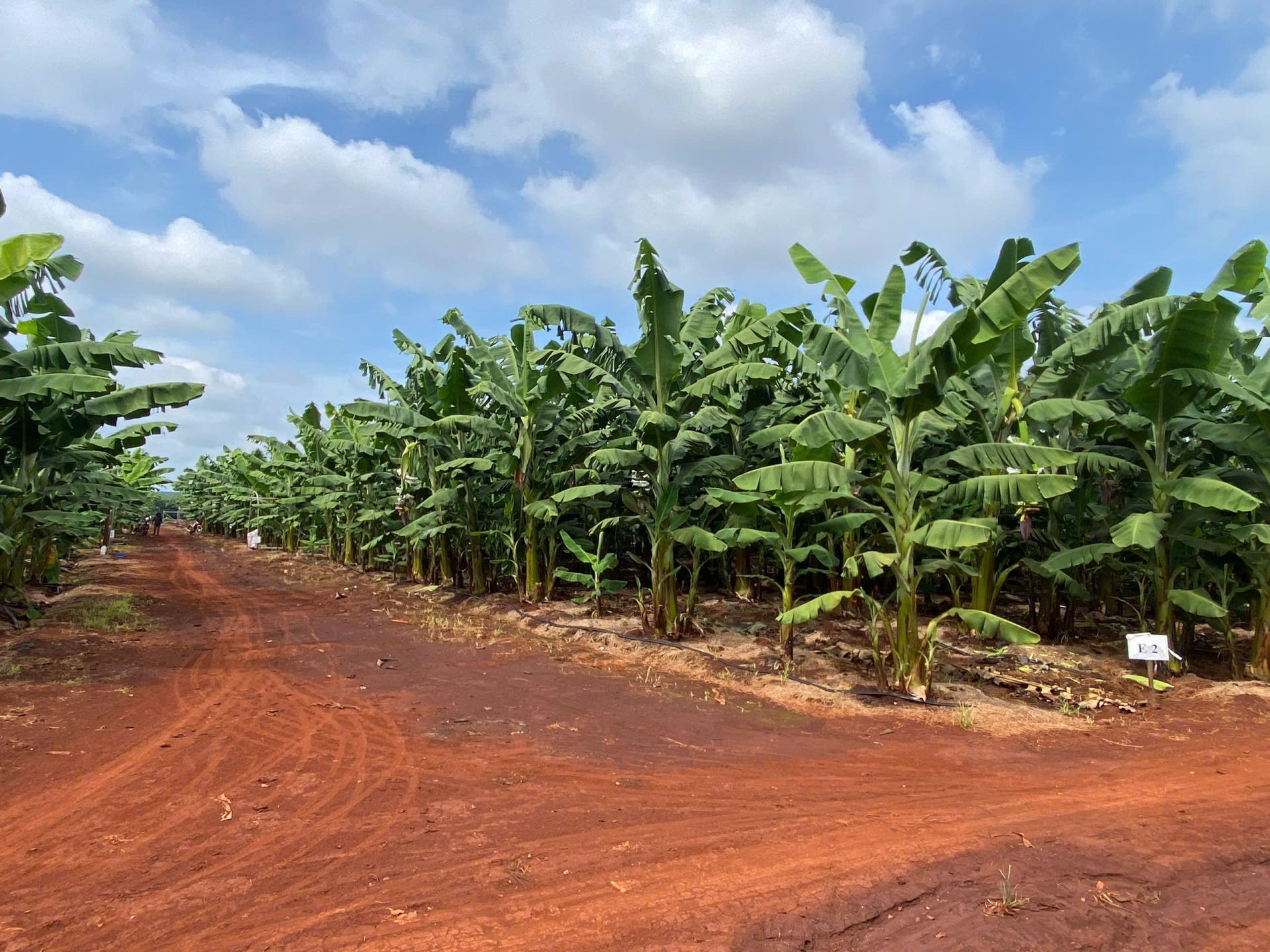
After multiple rounds of technical assessment and negotiation, Minh Lap Commune in Chon Thanh District, Binh Phuoc Province — now known as Nha Bich Commune following Vietnam's ongoing administrative boundary reorganizations — emerged as the optimal choice. The area brought together all the necessary conditions: porous basalt red soil with a suitable pH profile, stable groundwater availability, relatively flat terrain favorable for mechanization, and a location on transport routes connecting to Cat Lai and Phu My ports — the two primary export gateways for the southern region.
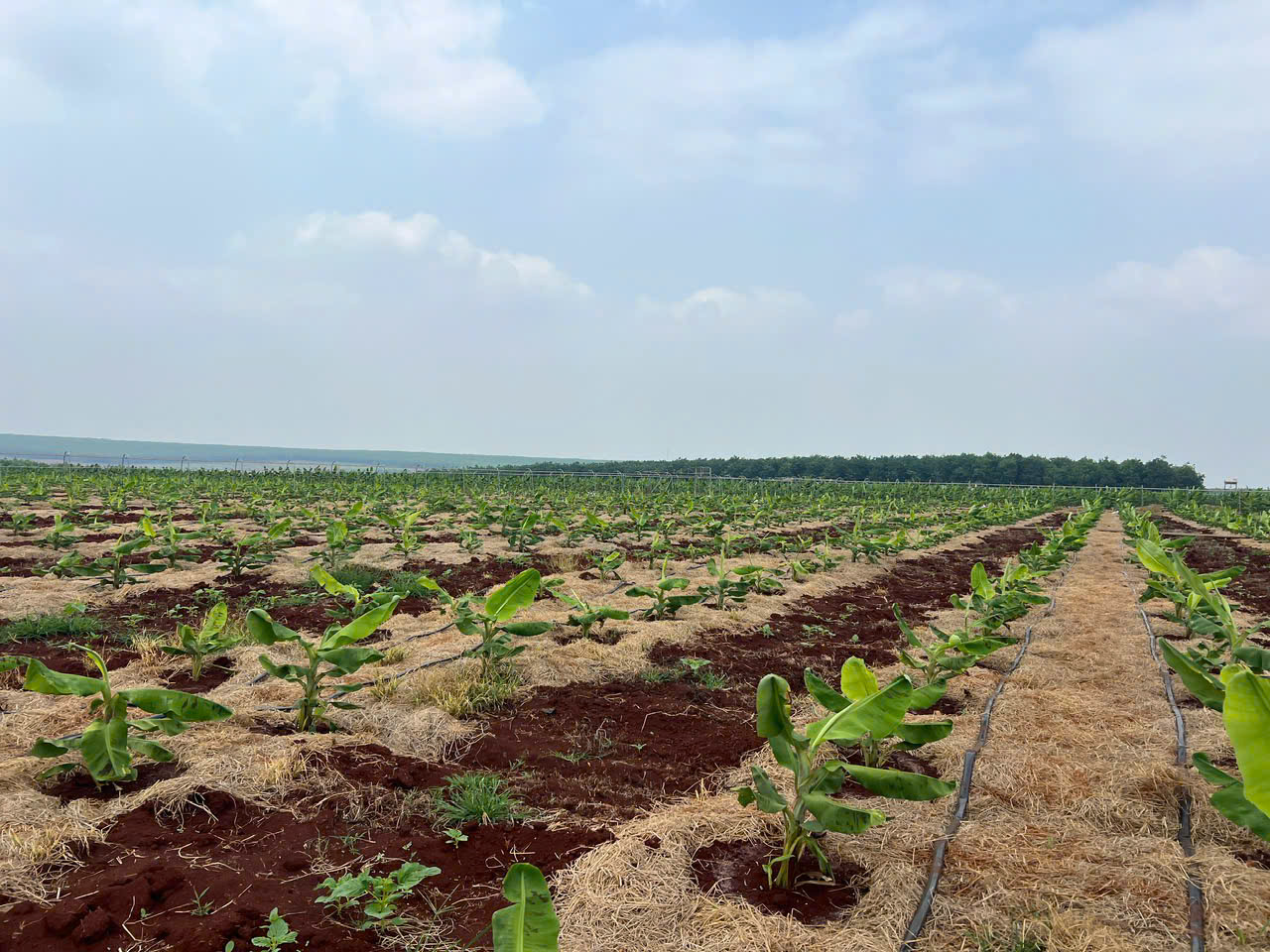
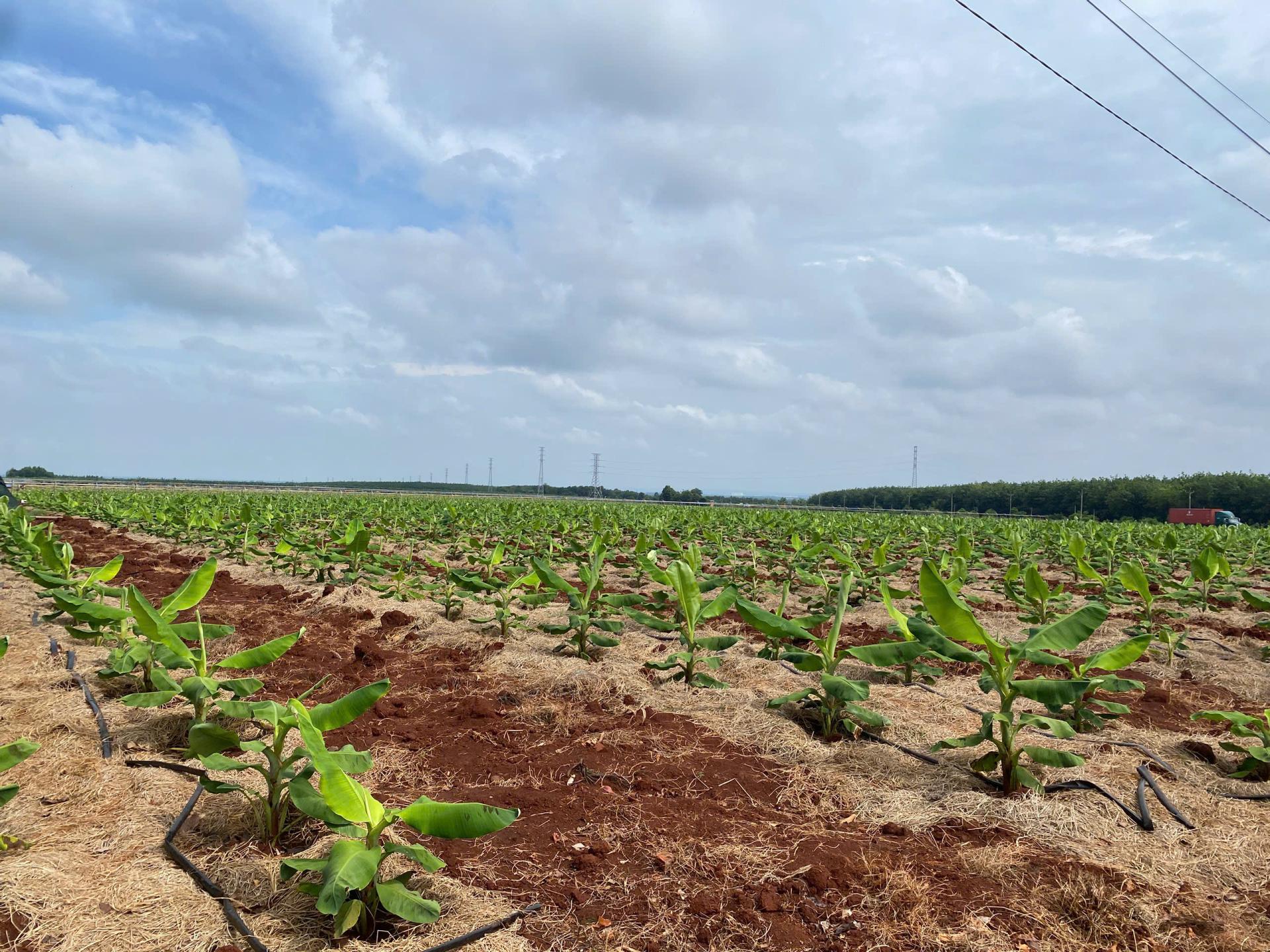
In 2019, NETSCO formally signed agreements and began large-scale new planting at Minh Lap across 250 hectares.
Developing 250 hectares of concentrated cultivation represented a challenge of entirely different complexity compared to the 60-hectare trial that preceded it. The early phase required simultaneous investment across multiple fronts: land leveling and preparation, installation of drip irrigation systems covering the full area, layout of internal farm roads capable of handling container trucks, construction of a pack house meeting export hygiene standards, and the recruitment and training of a skilled on-site workforce.
The planting variety selected was S126 — a Cavendish cultivar bred specifically for resistance to Panama Disease caused by Fusarium Tropical Race 4, one of the most serious threats facing banana production globally. The decision to plant S126 from the outset reflected NETSCO's long-term thinking: the higher upfront cost of disease-resistant planting material protects the entire investment against a pathogen risk capable of destroying a full plantation in a single season.
In 2020 and 2021, the project navigated the significant disruptions of the COVID-19 pandemic — particularly during the strict social distancing periods in Binh Phuoc Province that interrupted labor mobilization and supply chain logistics. The farm management team responded with flexibility, prioritizing the protection of young plant stock and maintaining irrigation systems throughout the most difficult period.
The first commercial banana lots from the Minh Lap plantation entered harvest and export operations once the plantation reached fruiting maturity — opening the operational phase of the project after years of investment and development.
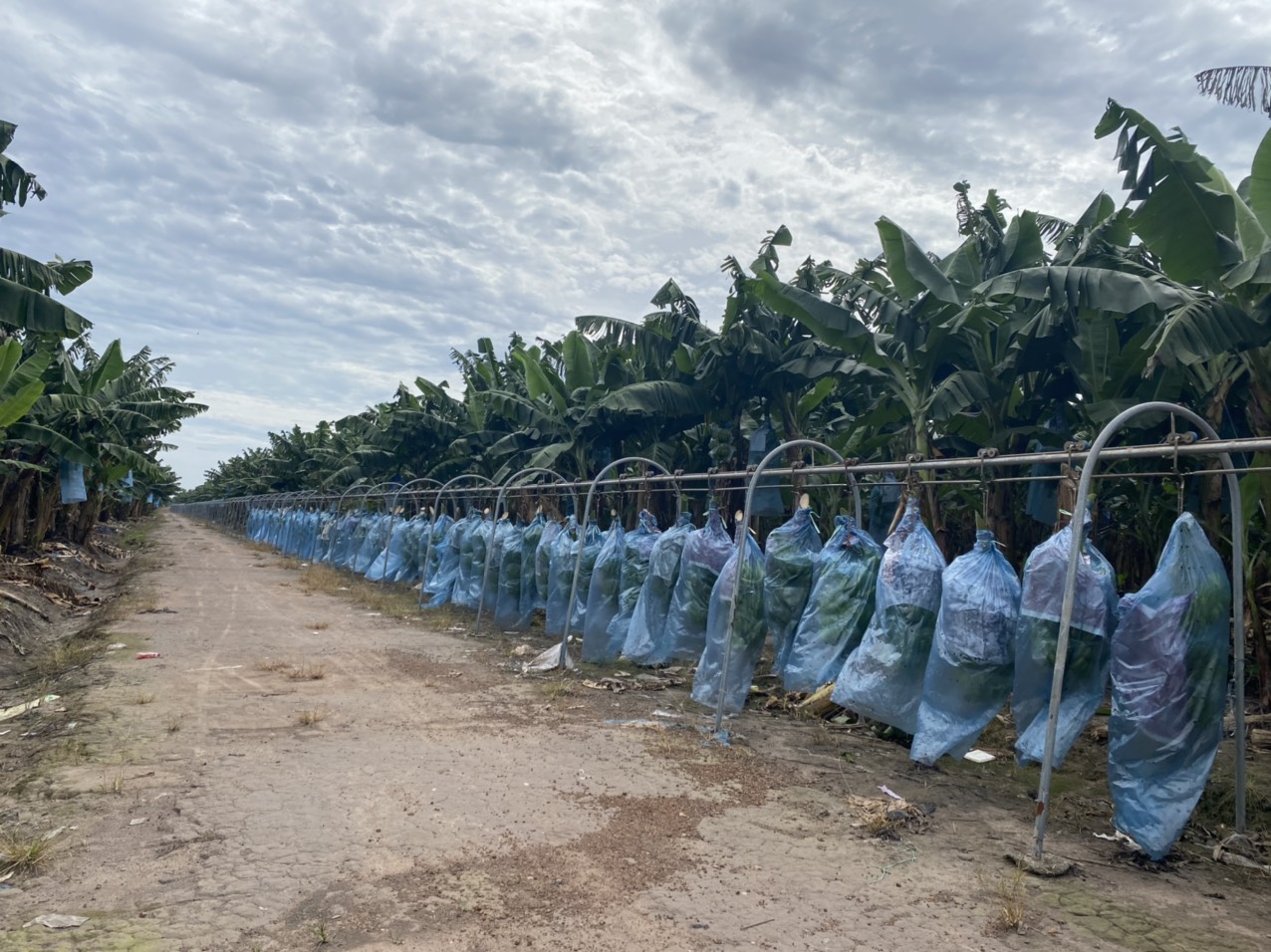
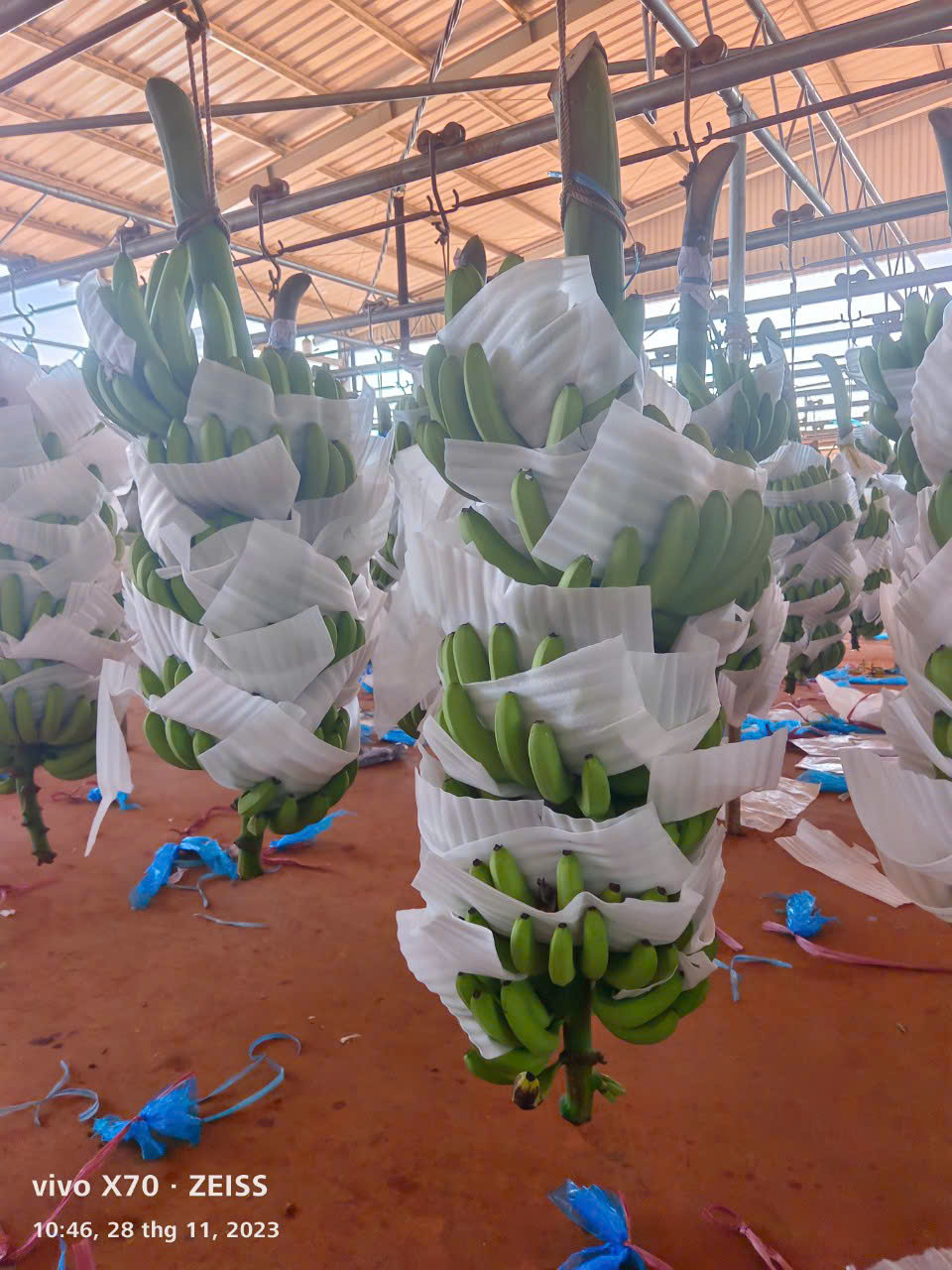
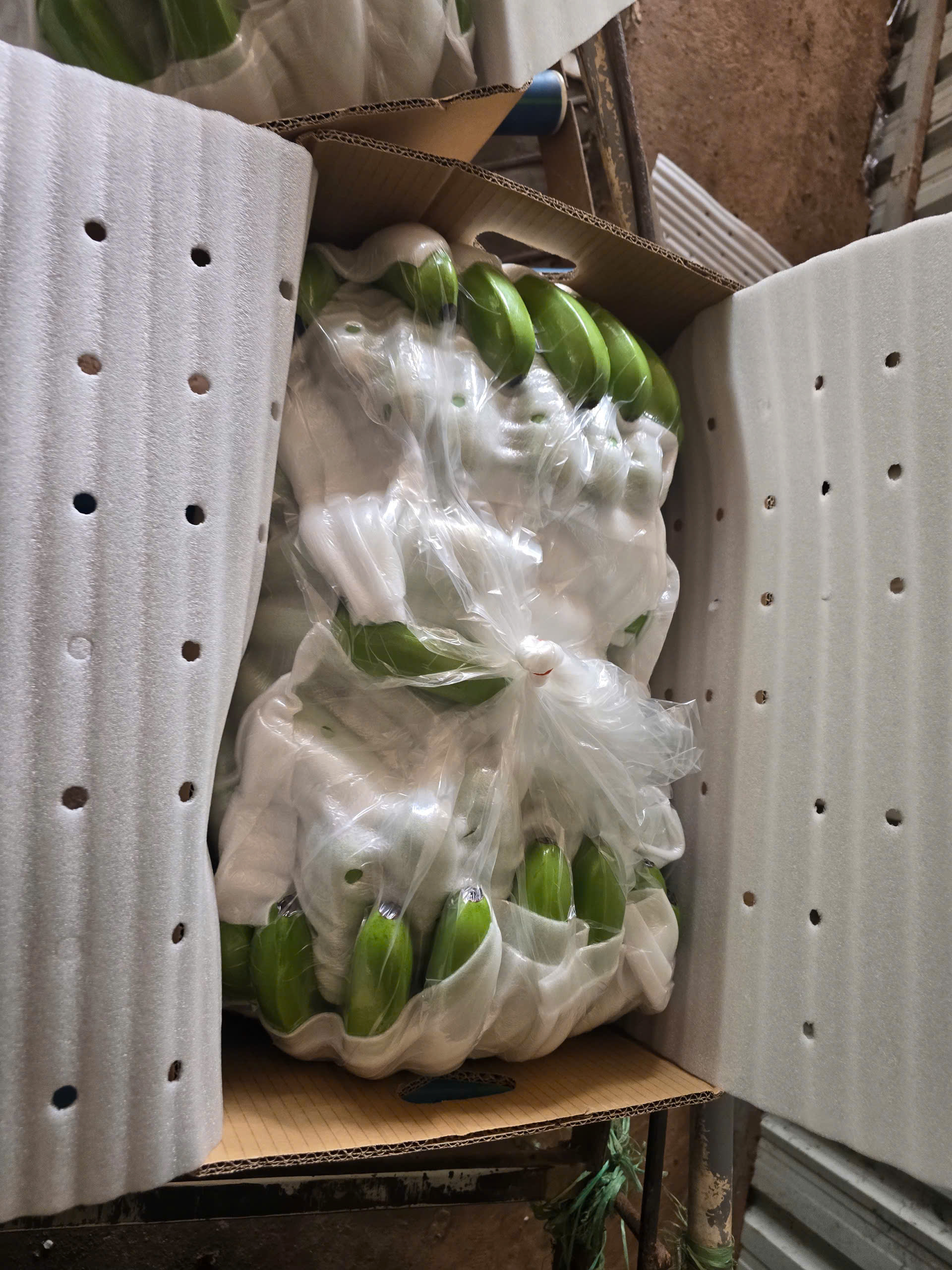
The end-to-end process from harvest to container loading at Minh Lap was built to strict export standards. Bananas are harvested at the correct physiological age — typically 11 to 13 weeks after flowering, depending on seasonal conditions. Immediately after cutting, bunches are transferred to the pack house for de-handing, grading, washing, and packing into 13 kg cartons in the shortest possible time — minimizing the window during which fruit is exposed to ambient temperature before entering the cold container environment.
Each carton is labeled with full traceability information meeting the requirements of the destination market. Refrigerated 40-foot containers are maintained at 13–14°C — the optimal temperature range for preserving green bananas throughout long ocean voyages to China, the Middle East, or markets further afield.
VietGAP certification is maintained across the full 250 hectares — not simply as a market requirement but as a commitment to transparency and accountability at every stage of the production chain.
If China and the Middle East provided the foundation for NETSCO's export operations, South Korea, Japan, and the European Union represent the next horizon — markets that set considerably higher quality standards and leave no room for inconsistency between shipments.
To meet the demands of these markets, NETSCO has been continuously upgrading technology across the full production chain. The drip irrigation system has been refined to deliver precise water and nutrient volumes calibrated to each growth stage, optimizing sugar development and achieving more consistent fruit sizing. Post-harvest processes have been strengthened with automated size-grading equipment and digital lot-tracking systems to support electronic traceability.
The Japanese and Korean markets are particularly exacting on fruit appearance — no surface scratches, no dark spots, no deviation from size specifications. This has driven ongoing improvements in harvesting technique and post-harvest handling across the workforce, as well as upgrades to protective packaging materials that shield fruit during transport. For the EU market, maximum residue limits (MRL) for crop protection products are significantly stricter than in Asian markets — a driver pushing NETSCO further toward organic-input cultivation and systematic reduction of chemical inputs across the farm.
The Cavendish banana plantation at Minh Lap — Nha Bich today stands as the clearest expression of NETSCO's operating philosophy: understand the market before committing, test thoroughly before scaling, and never trade quality for volume.
From the first consignment export containers in 2016, through 60 hectares of trial farming in Phu Giao, to 250 hectares in active operation at Minh Lap — every step was grounded in real field data and accumulated experience. Nothing was left to chance.
Looking ahead, the plantation's development is focused on two parallel priorities: continuous quality improvement to meet the rising standards of Korean, Japanese, and European buyers, and the maintenance of supply stability — a factor that international importers value no less highly than the quality of any individual shipment.
With the technical systems, standardized processes, and experienced team built over nearly a decade, the Minh Lap plantation is well-positioned to become one of Vietnam's leading production sites for export-grade Cavendish bananas.
 |  |
 |  |
 |  |